What If I Don't Make the Team? Sports Anxiety Therapy in Omaha, NE for Athletes Facing Tryout Uncertainty
Tryout season has a way of turning confident athletes into anxious wrecks overnight. One day your athlete is shooting hoops in the driveway without a care in the world. The next, they're lying awake at 11 p.m. asking, "What if I don't make the team?"
If that question has been running on a loop in your house lately, you're not alone. At Focus Therapy & Performance Coaching, we work with athletes across Omaha and Blair, Nebraska, who are stuck in this exact spot — caught between wanting something badly and being terrified they'll lose it before they even get the chance to try.
Let's talk about why tryout anxiety hits so hard, how therapy for anxiety in sports can help, and which changes make a difference.
Why Tryouts Feel So High-Stakes

For a lot of young athletes, a tryout doesn't just feel like a tryout. It feels like a referendum on who they are.
Sports become tangled up with identity fast. "I'm a soccer player" or "I'm a wrestler" isn't just a hobby label. It's part of how a kid sees themselves and how they think other people see them. So when tryouts loom, the brain doesn't process it as "will I make this roster?" It processes it as "will I still be someone worth knowing?"
That's a lot of pressure to put on a 90-minute evaluation.
Add in comparison (everyone's watching everyone else), public performance (parents, coaches, and future teammates are all right there), and a result that's completely out of the athlete's hands once tryouts end — and you've got a near-perfect recipe for anxiety.
What Does Sports Anxiety Actually Look Like?
Sports performance anxiety doesn't always show up as obvious nervousness. It can look like:
- Stomachaches or nausea in the days leading up to tryouts
- Trouble sleeping or racing thoughts at night
- Irritability or snapping at family over small things
- Avoidance — suddenly "forgetting" to practice, or downplaying how much they care
- Perfectionism spirals, where one missed shot feels like proof they've already failed
- Physical tension that actually makes performance worse, not better
That last one is the cruel irony of tryout anxiety: the more scared an athlete is of playing poorly, the more likely their nervous system is to make that fear come true. Tight shoulders, shallow breathing, and a racing mind are not exactly a recipe for a great free throw or a clean first touch.
The Question Underneath the Question
Here's something we say a lot in session: "What if I don't make the team?" is rarely just about the team.
Underneath it, athletes are usually asking things like:
- What if I'm not good enough — at anything?
- What if my friends make it and I don't?
- What if I let my parents down?
- What if this means I'm not who I thought I was?
Sports anxiety therapy isn't about pretending the outcome doesn't matter. It's about helping an athlete separate their worth from the roster list — so they can actually walk into tryouts with their body and brain working together instead of against each other.
What Actually Helps Before Tryouts?
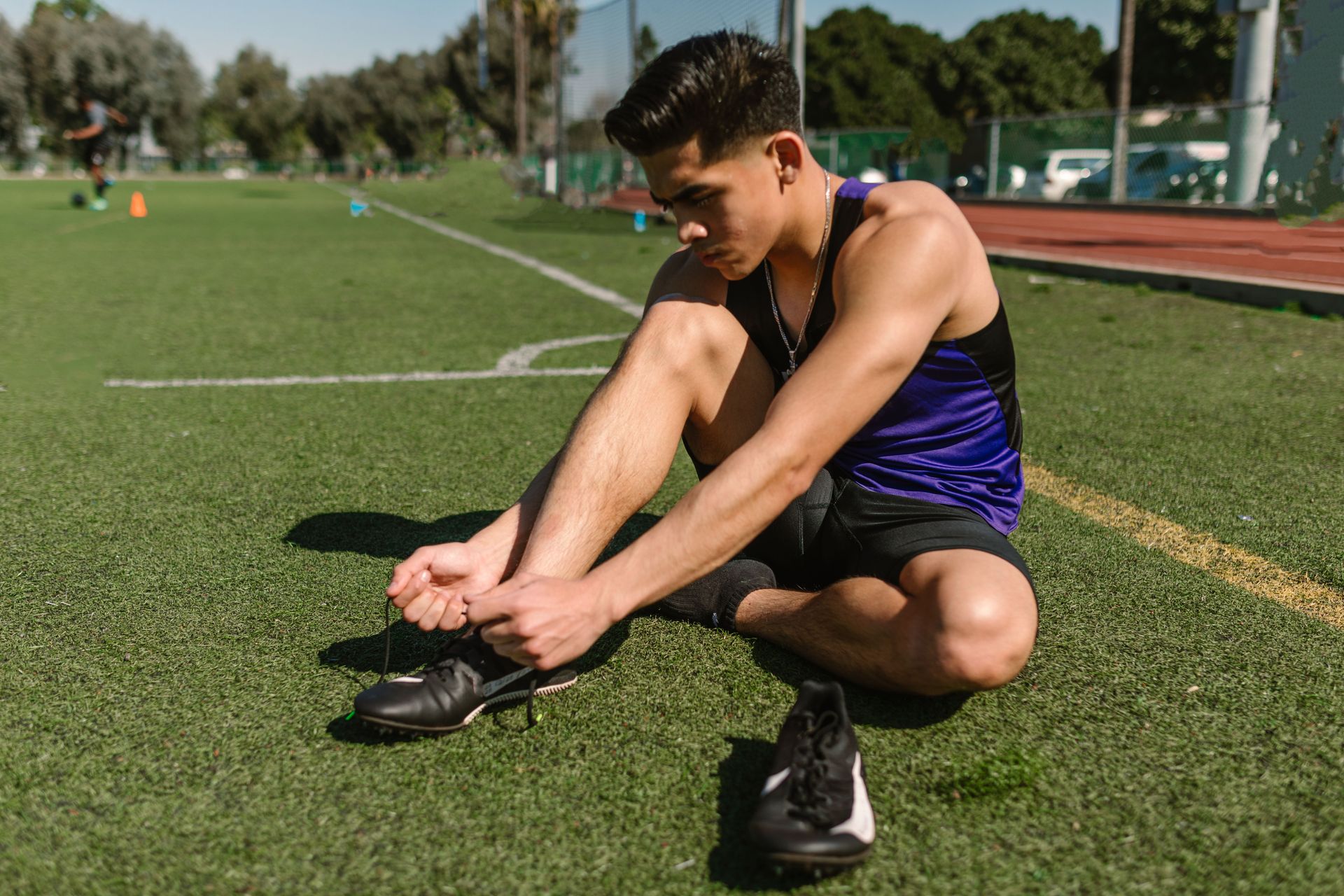
A few strategies we use with athletes preparing for tryouts:
Name the fear specifically. Vague anxiety is louder than named anxiety. "I'm scared I'll freeze up in front of the coach" is something we can actually work with. "I just feel weird" is harder to untangle.
Build a pre-performance routine. A consistent warm-up — physically and mentally — signals safety to the nervous system. This might include breathing techniques, a short visualization, or even a specific playlist.
Separate effort from outcome. We help athletes set goals they can actually control: hustle on every drill, communicate with teammates, recover quickly from a mistake. Those are things a coach can see, even if the final roster spot isn't guaranteed.
Practice the worst-case scenario. Sounds counterintuitive, but walking through "and if I don't make it, then what?" out loud, in a calm setting, takes a lot of the charge out of the fear. Usually the answer is something like: it would be disappointing, and also survivable.
Work with a professional who understands sports. General anxiety therapy is helpful. Therapy that also understands what it's like to stand at the free-throw line with everyone watching is even better.
You Don't Have to Wait Until It's a Crisis
A lot of families reach out to us only after tryout anxiety has already caused missed practices, meltdowns, or an athlete quitting a sport they used to love. You don't have to wait for that.
If your athlete is heading into tryouts this season and the pressure already feels bigger than the sport itself, Focus Therapy & Performance Coaching offers sports anxiety therapy and performance coaching for athletes across Omaha, Blair, and statewide via telehealth. Our clinicians understand both the mental health side and the competitive side — because sometimes what an athlete needs isn't just to calm down, but to actually perform.
Ready to help your athlete walk into tryouts with more confidence and less dread? Reach out to
Focus Therapy & Performance Coaching to
schedule a consultation.

Managing Tryout Anxiety With Support at Focus Therapy in Omaha, NE
Not knowing whether you’ll make the team can bring intense pressure for young athletes. At Focus Therapy, therapy for anxiety in sports in Omaha, NE, can help athletes manage tryout-related worry, cope with uncertainty, and build confidence that isn’t dependent on the final outcome.
Here’s how therapy can help:
- Schedule a consultation.
- Begin sports anxiety therapy focused on tryout stress, performance worries, and fear of not making the team.
- Develop practical coping strategies to manage anxious thoughts, stay focused, and handle the ups and downs of competition.
An
anxiety therapist can offer individualized support for athletes struggling with pressure, self-doubt, or uncertainty before and during tryouts.
Personalized Therapy and Mental Health Care at Focus Therapy
Focus Therapy offers individualized support for concerns such as ADHD, depression, postpartum concerns, trauma, PTSD, body image and self-esteem, parenting challenges, and major life changes.
Treatment is tailored to each client and may incorporate EMDR, trauma-informed therapy, and other evidence-based approaches. Through therapy, clients can gain practical ways to cope with challenges, build emotional strength, and feel more equipped to move forward.
Get to Know Your Omaha Therapist
Becky Meline is a licensed clinician and Sports Psychology-certified Mental Game Coach with more than 14 years of experience supporting children, teens, and adults. As a former collegiate volleyball player and Coyote Hall of Fame inductee, she understands firsthand the pressure, expectations, and mental challenges athletes may experience in competitive environments.
After founding Focus Therapy in 2017, Becky combined her mental health and performance coaching backgrounds to help clients overcome barriers, improve self-belief, and build practical strategies for reaching both personal and performance-related goals.